

- Published
- Updated
-
 8026
8026
Reflux - Symptoms, Treatment, and Prevention
Gastroesophageal reflux disease (GERD) occurs when stomach acid repeatedly flows back into the tube connecting the mouth and stomach (esophagus). This backflow (acid reflux) can irritate the lining of the esophagus.
Many people experience acid reflux from time to time. However, when acid reflux occurs repeatedly over time, it can cause GERD.
Most people are able to manage GERD discomfort with lifestyle changes and medication. And although it is unusual, some may need surgery to relieve their symptoms.
Symptoms
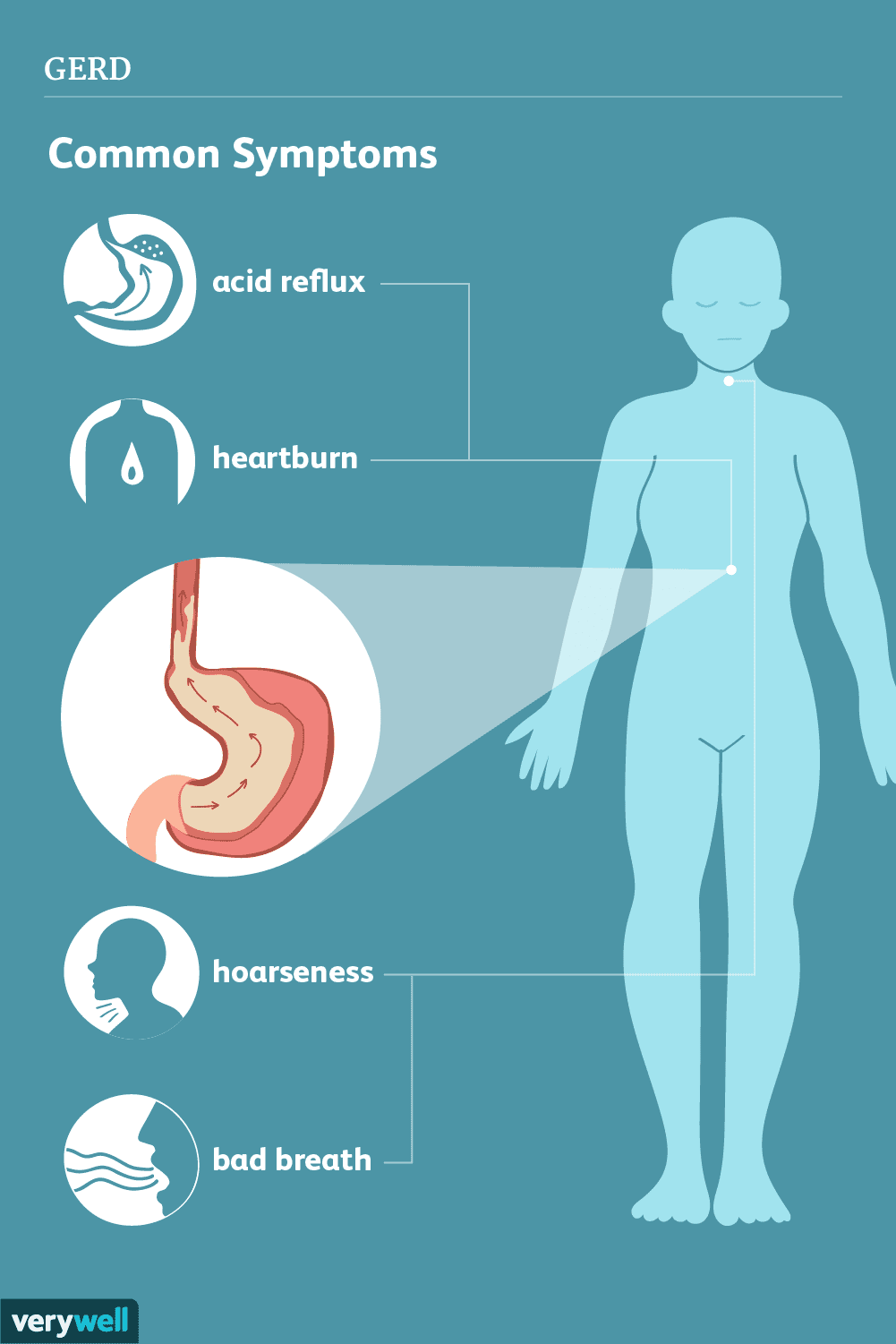
Common signs and symptoms of GERD include:
- A burning sensation in the chest (heartburn), usually after eating, which may be worse at night or when lying down
- Regurgitation (regurgitation) of food or acidic fluid
- Pain in the upper abdomen or chest
- Difficulty swallowing (dysphagia)
- A feeling of a lump in the throat
If you have acid reflux at night, you may also experience:
- Persistent cough
- Inflammation of the vocal cords (laryngitis)
- New or worsening asthma
When to see a doctor
Seek immediate medical attention if you have chest pain, especially if you also have shortness of breath or pain in your jaw or arm. These may be signs and symptoms of a heart attack.
Make an appointment with your doctor if:
- You experience severe or frequent symptoms of GERD
- You take over-the-counter acid reflux medication more than twice a week
Causes
GERD is caused by frequent acid reflux or reflux of non-acidic stomach contents.
When you swallow, a circular band of muscle around the bottom of your esophagus (lower esophageal sphincter) relaxes to allow food and liquid to flow into your stomach. The sphincter then closes again.
If the sphincter does not relax properly or weakens, stomach acid can flow back into the esophagus. This constant backflow of acid irritates the lining of the esophagus, often causing inflammation.
Risk factors
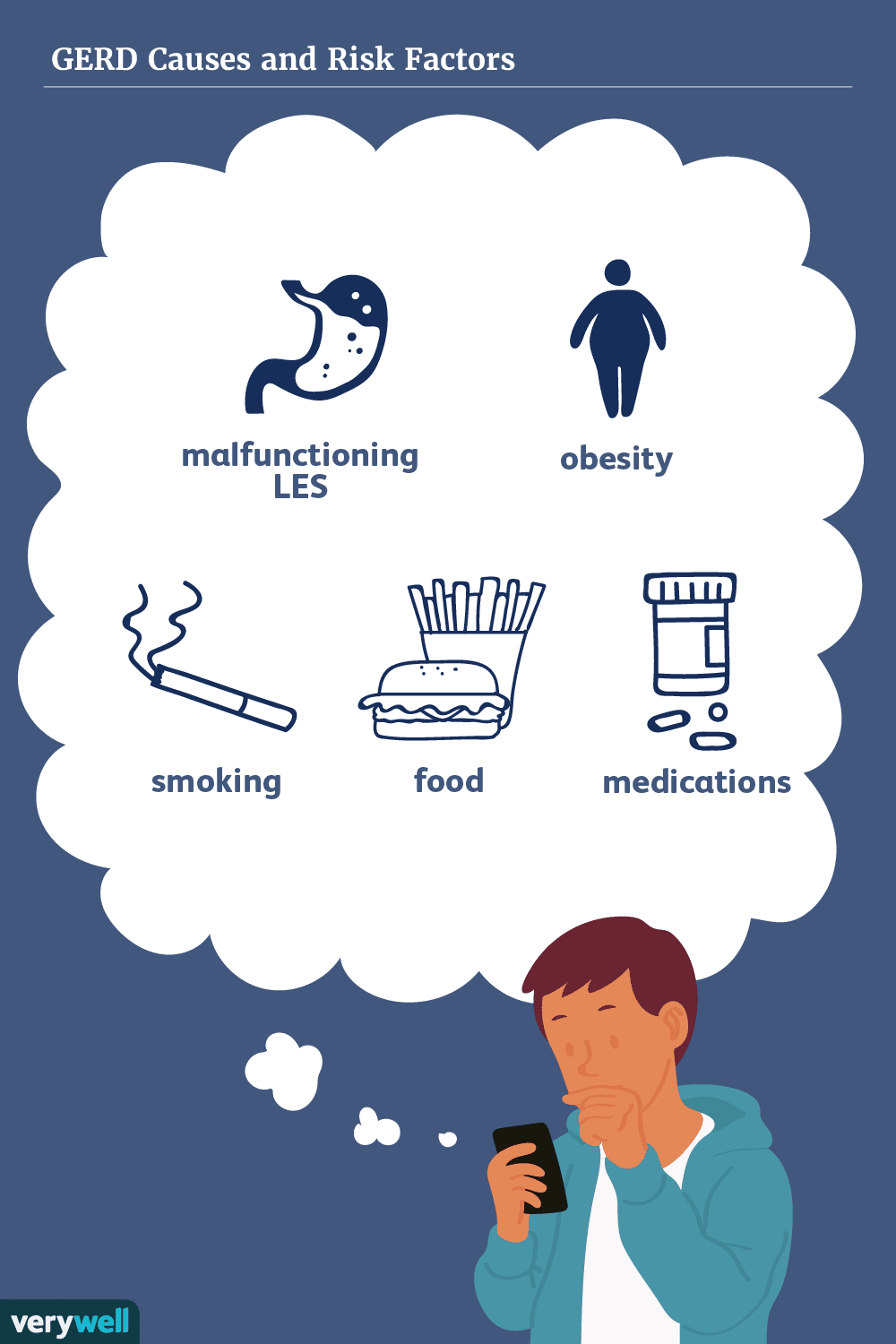
Conditions that can increase the risk of GERD include:
- Obesity
- Protrusion of the upper part of the stomach above the diaphragm (hiatal hernia)
- Pregnancy
- Connective tissue disorders, such as scleroderma
- Delayed stomach emptying
Factors that can worsen acid reflux include:
- Smoking
- Heavy meals or eating late at night
- Eating certain foods (triggers), such as fatty or fried foods
- Drinking certain beverages, such as alcohol or coffee
Complications
Over time, chronic inflammation of the esophagus can cause:
- Inflammation of the tissue in the esophagus (esophagitis). Stomach acid can destroy the tissue in the esophagus, causing inflammation, bleeding, and sometimes an open sore (ulcer). Esophagitis can cause pain and make swallowing difficult.
- Narrowing of the esophagus (esophageal stricture). Damage to the lower part of the esophagus from stomach acid causes scarring. The scar narrows the food passage, leading to swallowing problems.
- Precancerous changes in the esophagus (Barrett's esophagus). Acid damage can cause changes in the tissue lining the lower esophagus. These changes are associated with an increased risk of esophageal cancer.
Diagnosis
Your doctor may be able to diagnose GERD based on your signs and symptoms and a physical examination.
To confirm the diagnosis of GERD or check for complications, your doctor may recommend:
- Upper endoscopy. Your doctor inserts a thin, flexible tube equipped with a light and camera (endoscope) into your throat. The endoscope helps your doctor see the inside of your esophagus and stomach. The test results may not show any problems with reflux, but the endoscopy can detect inflammation of the esophagus (esophagitis) or other complications.
Endoscopy can also be used to take a tissue sample (biopsy) to be tested for complications such as Barrett's esophagus. In some cases, if there is narrowing in the esophagus, it can be stretched or widened during this procedure. This is done to improve difficult swallowing (dysphagia). - Ambulatory acid (pH) probe test. A monitor is placed in your esophagus to determine when and for how long stomach acid returns there. The monitor is connected to a small computer that you wear on your waist or with a strap over your shoulder.
The monitor may be a thin, flexible tube (catheter) that is inserted through your nose into your esophagus. Or it may be a clip that is placed in your esophagus during an endoscopy. The clip passes into your stool after about two days. - X-ray of the upper digestive system. X-rays are taken after you drink a chalky liquid that coats and fills the inside lining of your digestive tract. The coating allows your doctor to see the outline of your esophagus and stomach. This is especially helpful for people who have trouble swallowing.
You may also be asked to swallow a barium pill, which can help diagnose a narrowing of the esophagus that may interfere with swallowing. - Esophageal manometry. This test measures the rhythmic muscle contractions in your esophagus when you swallow. Esophageal manometry also measures the coordination and strength exerted by the muscles of your esophagus. This is usually done in people who have trouble swallowing.
- Transnasal esophagoscopy. This test is done to look for any damage to the esophagus. A thin, flexible tube with a video camera is placed through your nose and moved down your throat into your esophagus. The camera sends images to a video screen.
Treatment
Your doctor will probably recommend that you first try lifestyle changes and over-the-counter medications. If you do not feel relief within a few weeks, your doctor may recommend prescription medications and additional tests.
Surgery and other procedures
GERD can usually be controlled with medication. But if medication does not help or you want to avoid long-term use of medication, your doctor may recommend:
- Fundoplication. The surgeon wraps the upper part of your stomach around the lower esophageal sphincter to tighten the muscle and prevent reflux. Fundoplication is usually performed with a minimally invasive (laparoscopic) procedure. The wrapping of the upper part of the stomach can be complete (Nissen fundoplication) or partial. The most common partial procedure is Toupet fundoplication. Your surgeon will recommend the type that is best for you.
- LINKS device. A ring of small magnetic beads is wrapped around the junction of the stomach and esophagus. The magnetic attraction between the beads is strong enough to keep the connection closed to reflux acid, but weak enough to allow food to pass through. The LINKS device can be implanted through minimally invasive surgery. The magnetic beads have no effect on airport security or magnetic resonance imaging.
- Transoral fundoplication without incision (TIF). This new procedure involves tightening the lower esophageal sphincter by creating a partial wrap around the lower part of the esophagus using polypropylene fasteners. TIF is performed through the mouth using an endoscope and does not require a surgical incision. Its advantages include a quick recovery time and high tolerance.
If you have a large hiatal hernia, TIF alone is not an option. However, TIF may be possible if combined with laparoscopic hiatal hernia repair.
Since obesity can be a risk factor for GERD, your doctor may suggest weight loss surgery as a treatment option. Talk to your doctor to find out if you are a candidate for this type of surgery.
Lifestyle and home remedies
Lifestyle changes can help reduce the frequency of acid reflux. Try to:
- Maintain a healthy weight. Excess weight puts pressure on your abdomen and causes acid reflux into the esophagus.
- Quit smoking. Smoking reduces the ability of the lower esophageal sphincter to function properly.
- Avoid lying down after eating. Wait at least three hours after eating before lying down.
- Eat your food slowly and chew thoroughly. Put your fork down after each bite and pick it up again after you have chewed and swallowed that bite.
- Avoid foods and beverages that trigger reflux. Common triggers include alcohol, chocolate, caffeine, fatty foods, or mint.
- Avoid tight-fitting clothing. Clothes that fit tightly around your waist put pressure on your stomach and lower esophageal sphincter.
Alternative medicine
Some complementary and alternative therapies, such as ginger, chamomile, and slippery elm, may be recommended for treating GERD. However, none have been proven to cure GERD or reverse damage to the esophagus. Talk to your doctor if you are considering alternative therapies to treat GERD.
Preparing for your appointment
You may be referred to a doctor who specializes in the digestive system (gastroenterologist).
What you can do
- Write down your symptoms, including any that may seem unrelated to the reason you scheduled the appointment.
- Write down any triggers for your symptoms, such as specific foods.
- Make a list of all your medications, vitamins, and supplements.
- Write down your key medical information, including other conditions.
- Write down key personal information, including any recent changes or stressors in your life.
- Write down questions to ask your doctor.
- Ask a relative or friend to accompany you to help you remember what the doctor says.
Questions to ask your doctor
- What is the most likely cause of my symptoms?
- What tests do I need? Is there any special preparation for them?
- Is my condition temporary or chronic?
- What treatments are available?
- Are there any restrictions I need to follow?
In addition to the questions you have prepared to ask your doctor, don't hesitate to ask questions during your appointment whenever you don't understand something.
What to expect from your doctor
Your doctor will probably ask you a number of questions. If you are prepared to answer them, you may have time to discuss points you want to spend more time on. You may be asked:
- When did your symptoms start? How severe are they?
- Are your symptoms constant or intermittent?
- What, if anything, seems to improve or worsen your symptoms?
- Do your symptoms wake you up at night?
- Do your symptoms worsen after eating or when lying down?
- Does food or acidic material ever come up into the back of your throat?
- Do you have trouble swallowing food or do you have to change your diet to avoid difficulty swallowing?
- Have you gained or lost weight?
