

- Published
- Updated
-
 10282
10282
Sarcoma - Symptoms, Treatment, and Prevention
Skin cancer—the abnormal growth of skin cells—most often develops on skin exposed to the sun. But this common form of cancer can also occur on areas of your skin that are not usually exposed to sunlight.
There are three main types of skin cancer: basal cell carcinoma, squamous cell carcinoma, and melanoma.
You can reduce your risk of skin cancer by limiting or avoiding exposure to ultraviolet (UV) radiation. Checking your skin for suspicious changes can help detect skin cancer in its earliest stages. Early detection of skin cancer gives you the best chance for successful treatment of skin cancer.
Types
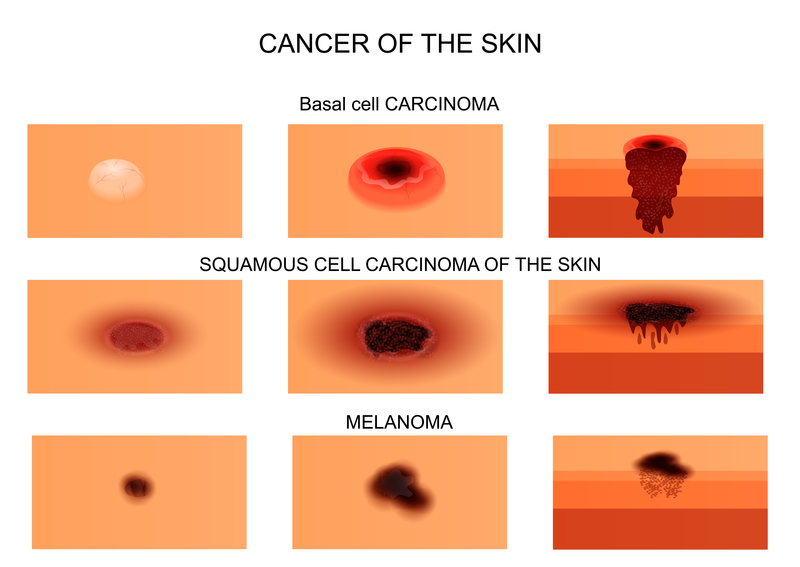
The types of skin cancer are:
- Basal cell carcinoma
- Melanoma
- Non-melanoma skin cancer
- Squamous cell carcinoma
Symptoms
Where does skin cancer develop?
Skin cancer mainly develops on areas of skin exposed to the sun, including the scalp, face, lips, ears, neck, chest, hands, and palms, as well as on the legs in women. But it can also form on areas that rarely see daylight—your palms, under your fingernails or toenails, and the genital area.
Skin cancer affects people of all skin colors, including those with darker skin tones. When melanoma occurs in people with dark skin, it is more likely to appear in areas that are not usually exposed to the sun, such as the palms of the hands and soles of the feet.
Signs and symptoms of basal cell carcinoma
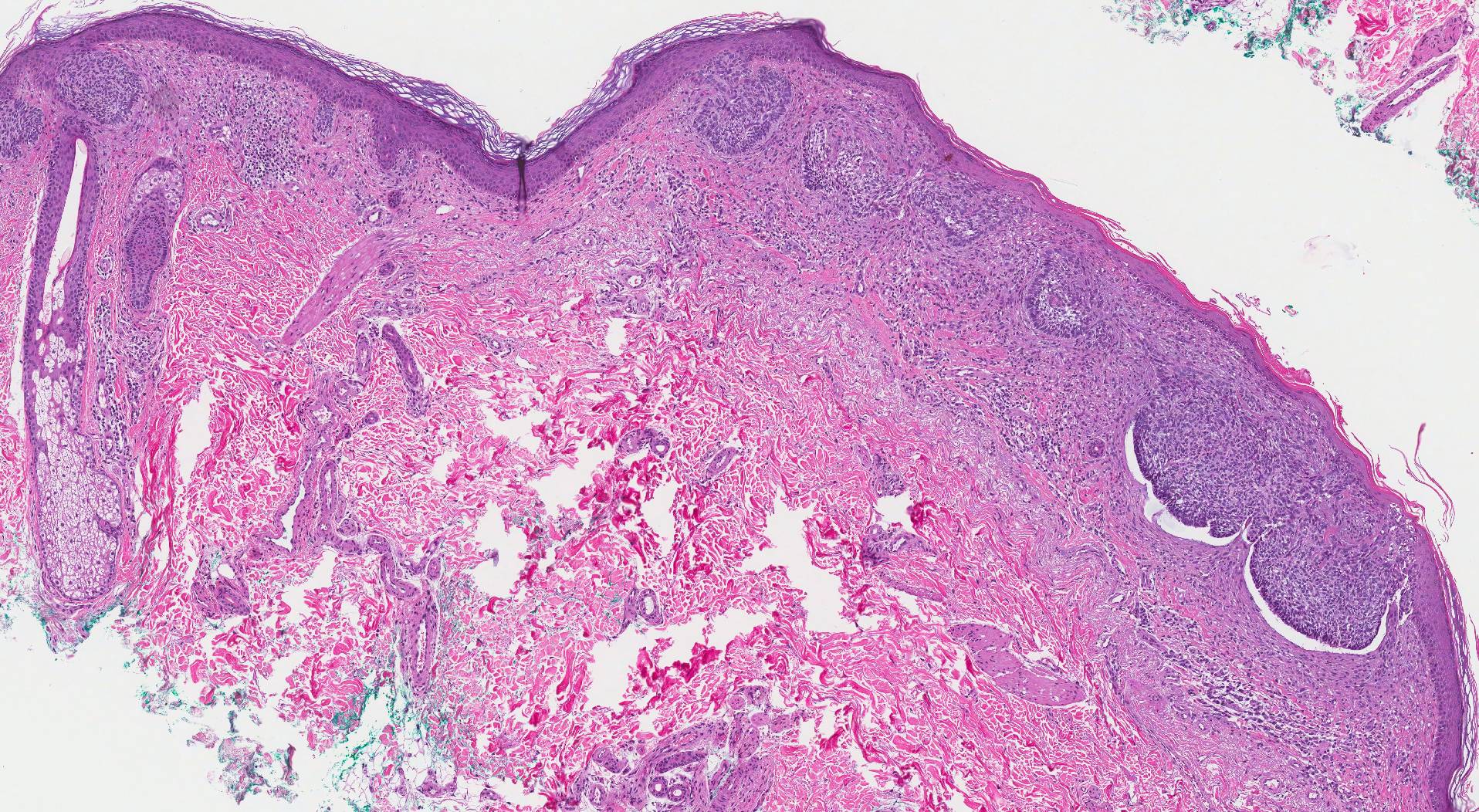
Basal cell carcinoma usually appears on sun-exposed areas of your body, such as your neck or face.
Basal cell carcinoma may look like:
- A pearly or waxy bump
- A flat lesion with a flesh-colored or brown mark
- A bleeding or scabbed wound that heals and returns
Signs and symptoms of squamous cell carcinoma
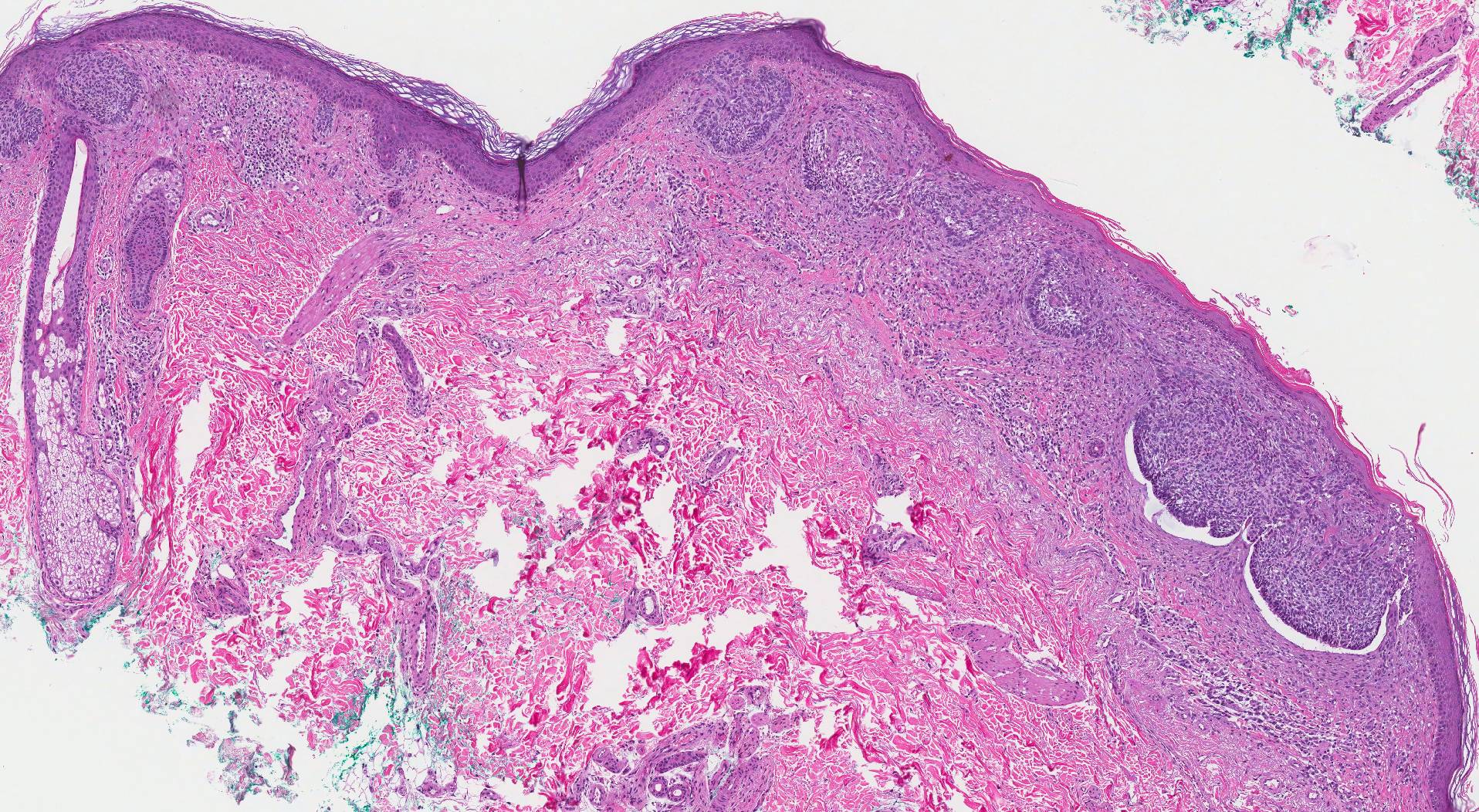
Squamous cell carcinoma most often occurs on sun-exposed areas of your body, such as your face, ears, and hands.
People with darker skin are more likely to develop squamous cell carcinoma in areas that are not often exposed to the sun.
Squamous cell carcinoma may look like:
- A hard, red bump
- A flat lesion with a scaly, crusted surface
Signs and symptoms of melanoma
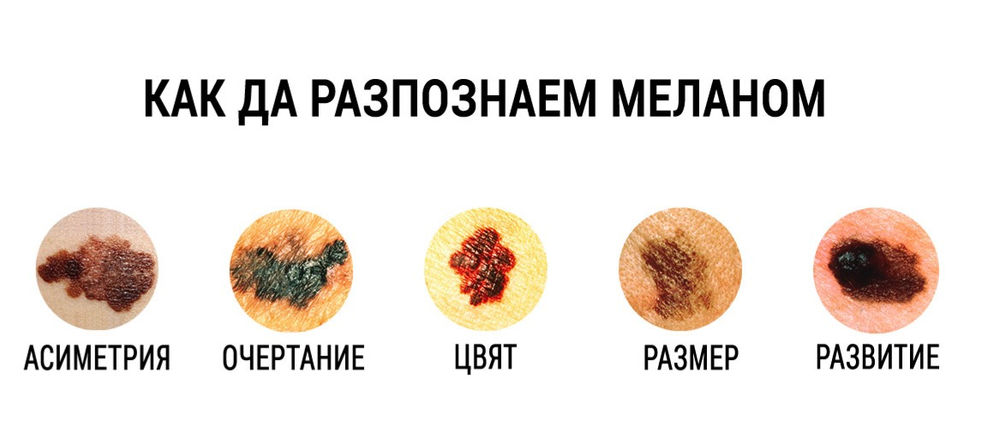
Melanoma can develop anywhere on your body, in otherwise normal skin or in an existing mole that becomes cancerous. Melanoma most often appears on the face or body of affected men. In women, this type of cancer most often develops on the lower legs. In both men and women, melanoma can appear on skin that has not been exposed to the sun.
Melanoma can affect people of any skin color. In people with darker skin, melanoma usually appears on the palms or soles of the feet, or under the fingernails or toenails.
Signs of melanoma include:
- A large brownish spot with darker spots
- A mole that changes color, size, or feel, or bleeds
- A small lesion with an irregular border and parts that appear red, pink, white, blue, or blue-black
- A painful lesion that itches or burns
- Dark lesions on the palms, soles, fingertips, or toes, or on the mucous membranes covering the mouth, nose, vagina, or anus
Signs and symptoms of less common skin cancers
Other, less common types of skin cancer include:
- Kaposi's sarcoma. This rare form of skin cancer develops in the blood vessels of the skin and causes red or purple patches on the skin or mucous membranes.
Kaposi's sarcoma occurs mainly in people with weakened immune systems, such as people with AIDS, and in people taking medications that suppress their natural immunity, such as people who have undergone organ transplants.
Other people at increased risk for Kaposi's sarcoma include young men living in Africa or older men of Italian or Eastern European Jewish heritage. - Merkel cell carcinoma. Merkel cell carcinoma causes firm, shiny nodules that appear on or just below the skin and in hair follicles. Merkel cell carcinoma most often occurs on the head, neck, and trunk.
- Sebaceous gland carcinoma. This unusual and aggressive cancer originates in the sebaceous glands in the skin. Sebaceous gland carcinomas—which usually appear as firm, painless lumps—can develop anywhere, but most occur on the eyelids, where they are often mistaken for other eyelid problems.
Causes
Skin cancer occurs when errors (mutations) occur in the DNA of skin cells. Mutations cause cells to grow out of control and form a mass of cancer cells.
Cells involved in skin cancer
Skin cancer begins in the uppermost layer of the skin, the epidermis. The epidermis is a thin layer that provides a protective covering of skin cells that your body constantly sheds. The epidermis contains three main types of cells:
- Squamous cells are located just below the outer surface and function as the inner lining of the skin.
- Basal cells, which produce new skin cells, are located beneath the squamous cells.
- Melanocytes—which produce melanin, the pigment that gives skin its normal color—are located in the lower part of the epidermis. Melanocytes produce more melanin when you are in the sun to protect the deeper layers of your skin.
Where your skin cancer starts determines its type and your treatment options.
Ultraviolet light and other potential causes
Much of the DNA damage in skin cells is the result of ultraviolet (UV) radiation found in sunlight and in the lights used in tanning beds. But sun exposure does not explain skin cancers that develop on skin that is not usually exposed to sunlight. This suggests that other factors may contribute to skin cancer risk, such as exposure to toxic substances or a condition that weakens your immune system.
Risk factors
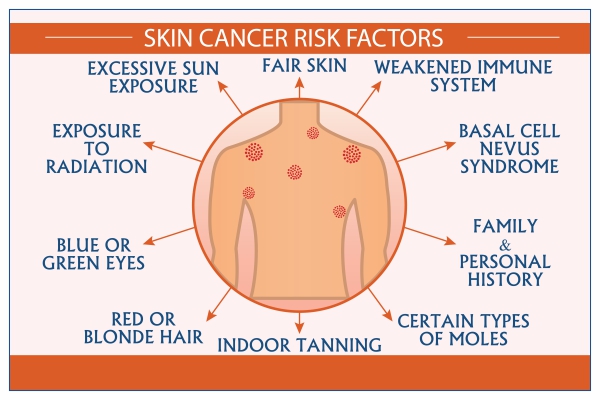
Factors that may increase your risk of skin cancer include:
- Fair skin. Anyone, regardless of skin color, can get skin cancer. However, having less pigment (melanin) in your skin provides less protection from harmful UV radiation. If you have blond or red hair and light-colored eyes and you have freckles or sunburn easily, you are much more likely to develop skin cancer than someone with darker skin.
- History of sunburns. If you had one or more blistering sunburns as a child or teenager, you increase your risk of developing skin cancer as an adult. Sunburns in adulthood are also a risk factor.
- Excessive sun exposure. Anyone who spends a significant amount of time in the sun can develop skin cancer, especially if their skin is not protected with sunscreen or clothing. Tanning beds also put you at risk. A tan is your skin's response to excessive UV radiation.
- Sunny or high-altitude climate. People who live in sunny, warm climates are exposed to more sunlight than people who live in colder climates. Living at higher altitudes, where sunlight is strongest, also exposes you to more radiation.
- Moles. People who have many moles or unusual moles, called dysplastic nevi, are at increased risk for skin cancer. These unusual moles — which look irregular and are usually larger than normal moles — are more likely than others to become cancerous. If you have a history of unusual moles, watch them regularly for changes.
- Precancerous skin lesions. The presence of skin lesions known as actinic keratoses may increase your risk of developing skin cancer. These precancerous skin growths usually appear as rough, scaly patches that vary in color from brown to dark pink. They are most common on the face, head, and hands of fair-skinned people whose skin has been damaged by the sun.
- Family history of skin cancer. If one of your parents or siblings has had skin cancer, you may have an increased risk of developing the disease.
- Personal history of skin cancer. If you have had skin cancer once, you are at risk of developing it again.
- Weakened immune system. People with weakened immune systems are at greater risk of developing skin cancer. This includes people living with HIV/AIDS and those taking immunosuppressants after organ transplantation.
- Exposure to radiation. People who have undergone radiation therapy for skin conditions such as eczema and acne may have an increased risk of skin cancer, especially basal cell carcinoma.
- Exposure to certain substances. Exposure to certain substances, such as arsenic, may increase the risk of skin cancer.
Prevention
Most types of skin cancer are preventable. To protect yourself, follow these tips for preventing skin cancer:
- Avoid the sun in the middle of the day. For many people in North America, the sun's rays are strongest between about 10 a.m. and 4 p.m. Schedule outdoor activities for other times of the day, even in winter or when the sky is cloudy.
You absorb UV radiation throughout the year, and clouds offer little protection from harmful rays. Avoiding the strongest sun helps you avoid sunburn and tanning, which cause skin damage and increase your risk of developing skin cancer. Sun exposure accumulated over time can also cause skin cancer. - Wear sunscreen all year round. Sunscreens do not filter out all harmful UV radiation, especially radiation that can lead to melanoma. But they play a key role in an overall sun protection program.
Use a broad-spectrum sunscreen with an SPF of at least 30, even on cloudy days. Apply sunscreen generously and reapply every two hours—or more often if you are swimming or sweating. Use a generous amount of sunscreen on all exposed skin, including your lips, the tops of your ears, and the backs of your hands and neck. - Wear protective clothing. Sunscreen products do not provide complete protection from ultraviolet rays. So cover your skin with dark, tightly woven clothing that covers your arms and legs, and a wide-brimmed hat that provides more protection than a baseball cap or visor.
Some companies also sell sun-protective clothing. A dermatologist can recommend a suitable brand.
Don't forget your sunglasses. Look for ones that block both types of UV radiation—UVA and UVB rays. - Avoid tanning beds. The lights used in tanning beds emit UV rays and can increase your risk of skin cancer.
- Be aware of sun-sensitive medications. Some common prescription and over-the-counter medications, including antibiotics, can make your skin more sensitive to sunlight.
Ask your doctor or pharmacist about the side effects of any medications you are taking. If they increase your sensitivity to sunlight, take extra precautions to avoid sun exposure to protect your skin. - Check your skin regularly and report any changes to your doctor. Check your skin often for new growths or changes in existing moles, freckles, bumps, and birthmarks.
Use mirrors to check your face, neck, ears, and scalp. Examine your chest and body, as well as the upper and lower parts of your arms. Examine both the front and back of your legs, including your feet and the spaces between your toes. Also check your genital area and between your buttocks.
Diagnosis
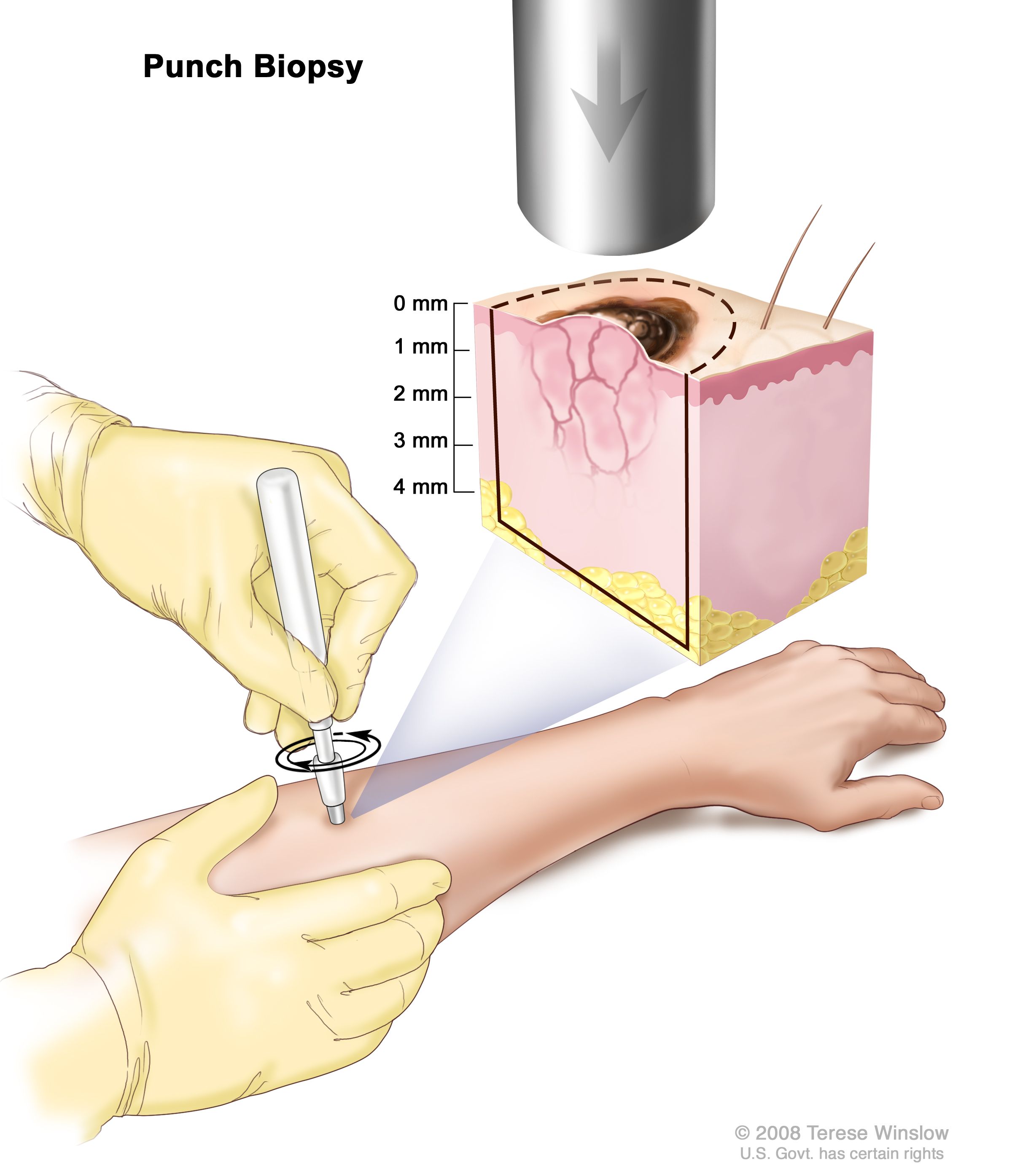
To diagnose skin cancer, your doctor may:
- Examine your skin. Your doctor may examine your skin to determine whether your skin changes are likely to be skin cancer. Additional tests may be needed to confirm this diagnosis.
- Take a sample of suspicious skin for testing (skin biopsy). Your doctor may remove suspicious-looking skin for laboratory testing. A biopsy can determine whether you have skin cancer and, if so, what type of skin cancer you have.
Determining the stage of skin cancer
If your doctor finds that you have skin cancer, you may have additional tests to determine the stage of the skin cancer.
Since superficial skin cancers, such as basal cell carcinoma, rarely spread, a biopsy, which often removes the entire growth, is the only test needed to determine the stage of the cancer. But if you have a large squamous cell carcinoma, Merkel cell carcinoma, or melanoma, your doctor may recommend additional tests to determine the stage of the cancer.
Additional tests may include imaging tests to examine nearby lymph nodes for signs of cancer or a procedure to remove a nearby lymph node and test it for signs of cancer (sentinel lymph node biopsy).
Doctors use Roman numerals from I to IV to indicate the stage of cancer. Stage I cancers are small and confined to the area where they started. Stage IV indicates advanced cancer that has spread to other parts of the body.
The stage of skin cancer helps determine which treatment options will be most effective.
Treatment
Your treatment options for skin cancer and precancerous skin lesions, known as actinic keratoses, will vary depending on the size, type, depth, and location of the lesions. Small skin cancers limited to the surface of the skin may not require treatment other than an initial skin biopsy that removes the entire growth.
If additional treatment is necessary, options may include:
- Freezing. Your doctor may destroy actinic keratoses and some small early skin cancers by freezing them with liquid nitrogen (cryosurgery). The dead tissue falls off when it thaws.
- Excision surgery. This type of treatment may be appropriate for any type of skin cancer. Your doctor cuts out (excisions) the cancerous tissue and a surrounding margin of healthy skin. In some cases, wide excision—removing extra normal skin around the tumor—may be recommended.
- Mohs surgery. This procedure is for larger, recurrent, or hard-to-treat skin cancers, which may include both basal and squamous cell carcinomas. It is often used in areas where it is necessary to preserve as much skin as possible, such as on the nose. During Mohs surgery, your doctor removes the growth layer by layer, examining each layer under a microscope until no abnormal cells remain. This procedure allows cancer cells to be removed without taking away too much of the surrounding healthy skin.
- Curettage and electrodesiccation or cryotherapy. After removing most of the growth, your doctor scrapes away layers of cancer cells using a device with a round blade (curette). An electric needle destroys any remaining cancer cells. In a variation of this procedure, liquid nitrogen may be used to freeze the base and edges of the treated area. These simple, quick procedures can be used to treat basal cell carcinoma or thin squamous cell carcinoma.
- Radiation therapy. Radiation therapy uses powerful energy beams, such as X-rays, to kill cancer cells. Radiation therapy may be an option when the cancer cannot be completely removed during surgery.
- Chemotherapy. In chemotherapy, drugs are used to destroy cancer cells. For cancers limited to the top layer of skin, creams or lotions containing anticancer agents can be applied directly to the skin. Systemic chemotherapy may be used to treat skin cancer that has spread to other parts of the body.
- Photodynamic therapy. This treatment destroys skin cancer cells with a combination of laser light and drugs that make the cancer cells sensitive to light.
- Biological therapy. Biological therapy uses your body's immune system to kill cancer cells.
Preparing for your appointment
Make an appointment with your family doctor if you notice any unusual skin changes that concern you. In some cases, you may be referred to a doctor who specializes in skin diseases and conditions (dermatologist).
Since appointments can be brief and there is often a lot to cover, it is a good idea to be well prepared. Here is some information to help you prepare and know what to expect from your doctor.
What can you do?
- Be aware of any restrictions before making an appointment. When you make your appointment, be sure to ask if there is anything you need to do in advance, such as restricting your diet.
- Write down all the symptoms you are experiencing, including those that may seem unrelated to the reason you scheduled the appointment.
- Write down key personal information, including any major stressors or recent life changes.
- Make a list of all medications, vitamins, or supplements you are taking.
- Consider bringing a family member or friend with you. It can sometimes be difficult to remember all the information provided during an appointment. Someone accompanying you may remember something you missed or forgot.
- Write down questions to ask your doctor.
Your time with your doctor is limited, so making a list of questions can help you make the most of your time together. List your questions from most important to least important in case time runs out. For skin cancer, some basic questions to ask your doctor include:
- Do I have skin cancer?
- What type of skin cancer do I have?
- Will I need additional tests?
- How fast is my type of skin cancer growing and spreading?
- What are my treatment options?
- What are the potential risks of each treatment?
- Will the surgery leave a scar?
- Am I at increased risk for additional types of skin cancer?
- How can I reduce my risk of additional types of skin cancer?
- Should I have regular skin exams to check for additional types of skin cancer?
- Should I see a specialist? How much will this cost, and will my insurance cover it?
- Is there a generic alternative to the medication you are prescribing?
- Are there any brochures or other printed materials I can take with me? What websites do you recommend?
- What will determine whether I need to schedule a follow-up visit?
In addition to the questions you have prepared to ask your doctor, don't hesitate to ask any other questions that come to mind.
What to expect from your doctor
Your doctor will probably ask you a number of questions. If you are prepared to answer them, you may have time to cover other issues you want to discuss. Your doctor may ask:
- When did you first notice changes in your skin?
- Have you noticed a skin lesion that has grown or changed?
- Do you have a skin lesion that bleeds or itches?
- How severe are your symptoms?
