

- Published
- Updated
-
 7469
7469
Cataracts - Causes, Symptoms, Treatment, and Prevention
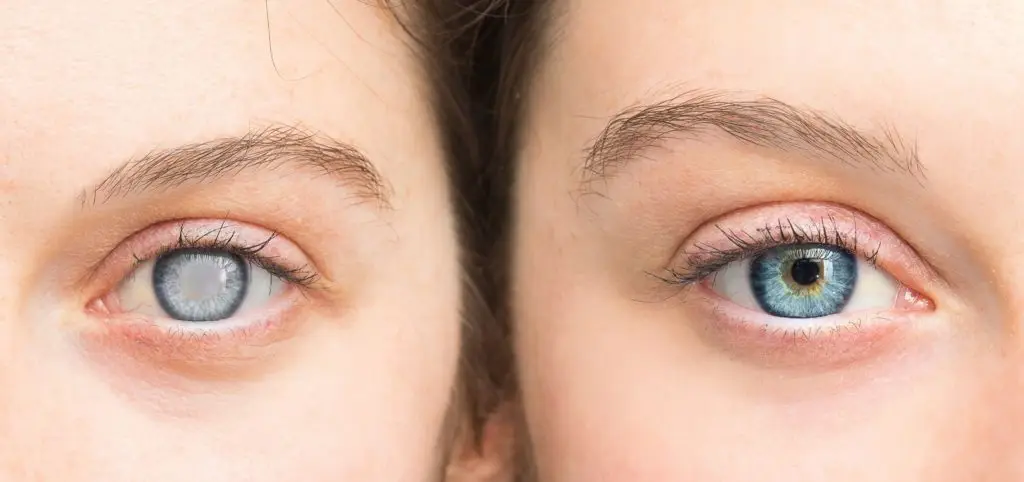
A cataract is a clouding of the lens of your eye, which is normally clear. Most cataracts develop slowly over time, causing symptoms such as blurred vision.
Cataracts can be removed surgically through an outpatient procedure that restores vision in almost everyone.
What is a cataract?
A cataract develops when the lens in your eye, which is normally clear, becomes cloudy.
In order for your eye to see, light passes through a transparent lens. The lens is behind the iris (the colored part of the eye).
The lens focuses light so that your brain and eye can work together to process the information into a picture.
When a cataract clouds the lens, your eye cannot focus light in the same way. This results in blurred vision.
The change in your vision depends on the location and size of the cataract.
Who gets cataracts?
Most people start to get cataracts around age 40. But you probably won't notice symptoms until after age 60. Rarely, babies are born with cataracts due to a birth defect.
You are more likely to develop cataracts if:
- You smoke cigarettes.
- You live in an area with air pollution.
- You drink heavily.
- You have a family history of cataracts.
How common are cataracts?
Cataracts are common among older people. More than 50% of people aged 80 and over have had cataracts.
Can you get cataracts in both eyes?
You can get cataracts in both eyes. However, one eye may be more affected than the other or may develop later.
What causes cataracts?
The lens of your eye is mostly made up of water and proteins. As the proteins break down over time, they remain in your eye. These leftover proteins can make your lens cloudy, so it's hard to see clearly. This is a typical—though unpleasant—part of aging.
Certain factors can accelerate the formation of cataracts, such as:
- Diabetes.
- Steroids, common medications used to treat conditions such as arthritis and lupus.
- Eye surgery or eye injuries.
- Radiation treatment to the upper body.
- Spending a lot of time in the sun without eye protection, such as sunglasses.
What are the symptoms of cataracts?
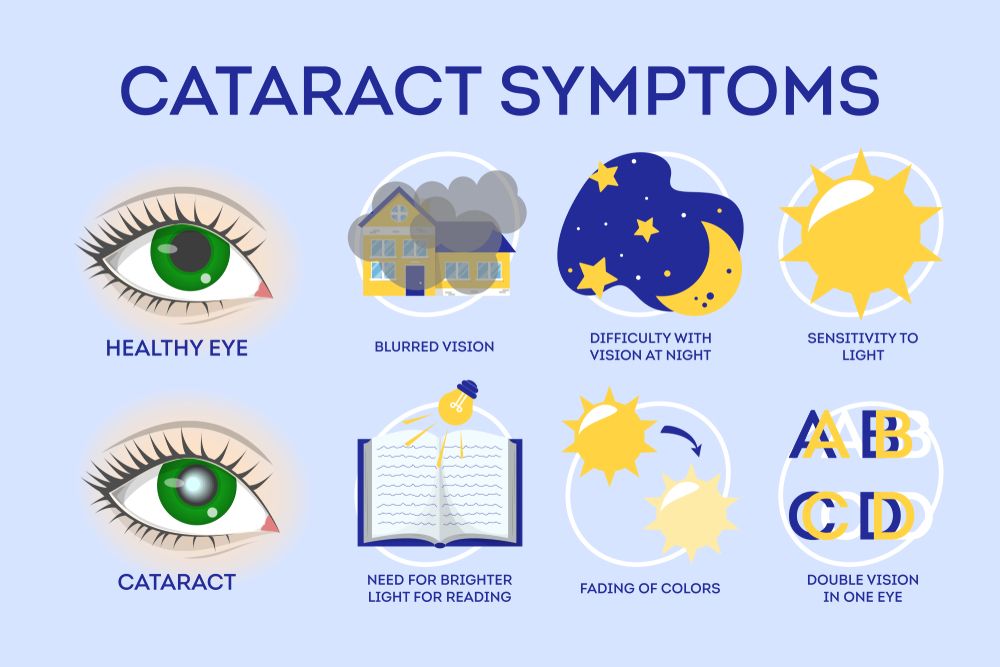
Cataracts are a common part of the aging process of the eye. Ultimately, they can cause:
- Blurred, foggy vision.
- Sensitivity to bright sunlight, lamps, or headlights.
- Glare (seeing a halo around lights), especially when driving at night with oncoming headlights.
- Changes in eyeglass prescriptions, including sudden nearsightedness.
- Double vision.
- Need for brighter light for reading.
- Difficulty seeing at night.
- Changes in the way you see colors.
Are cataracts painful?
Cataracts are not usually painful. But they can cause discomfort by making your eyes more sensitive to light.
How are cataracts diagnosed?
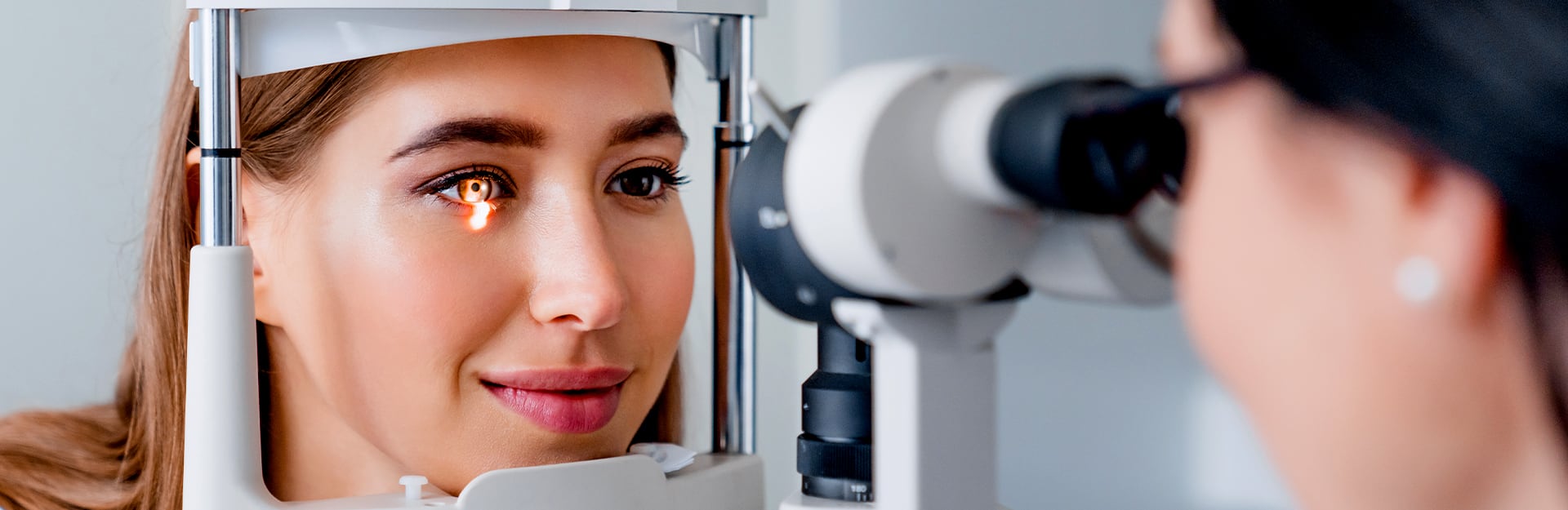
If you have symptoms of cataracts, see an eye doctor (ophthalmologist) for a complete eye exam. The doctor will need to dilate your pupil to see the inside of your eye.
During this test, special eye drops dilate your pupil (the black part of your eye). When your pupil is wide open, your doctor checks the health of your eye. Your doctor can see if you have cataracts or other problems and understand how much of your vision is blocked.
Cataract Treatment?
If your cataract symptoms are mild, you may just need a prescription for glasses or contact lenses. Cataracts usually get worse over time. Eventually, your doctor will probably recommend surgery to remove the cataract.
At What Stage Should Cataracts Be Removed?
Most people wait until the cataract causes vision loss that is a problem, such as difficulty reading or driving.
Sometimes people need cataract surgery to see and treat other eye conditions, such as age-related changes in the retina (tissue at the back of the eye) or diabetes-related retinopathy.
Who removes cataracts?
An ophthalmologist (a doctor who specializes in eye health) performs cataract surgery.
An ophthalmologist (a doctor who specializes in eye health) performs cataract removal surgery.
How are cataracts removed?
During cataract surgery, the surgeon removes the cloudy lens and replaces it with an artificial lens implant. The new lens is clear, shaped to fit your eye, and customized to your vision needs.
Cataract removal takes about an hour. It is performed under local anesthesia (medication to numb a specific area). Your doctor will use eye drops or an injection to numb your eye. You will be awake, but you will not feel or see the procedure.
Types of Cataract Surgery?
There are two types of cataract removal procedures:
- Phacoemulsification cataract surgery—Phacoemulsification is the most common cataract procedure. Your ophthalmologist makes a small opening in your eye to reach the cloudy lens. Using high-frequency sound waves (ultrasound) or a laser, your ophthalmologist breaks the lens into pieces. The doctor then sucks the lens fragments out of your eye and inserts a new plastic lens.
- Extracapsular cataract surgery. Your doctor may recommend this procedure if phacoemulsification is not a good option for you. For example, an advanced cataract may be too dense to break up easily. In extracapsular cataract surgery, your ophthalmologist makes a larger opening in the eye. Instead of breaking up the lens and then removing it, your doctor removes the lens in one piece. The surgeon then inserts the manufactured lens.
What can I expect after surgery?
After surgery, it is typical to have a day or two of:
- Itching
- Mild discomfort
- Watery eyes.
- Sensitivity to light.
- Blurred vision.
You may need to use eye drops for several weeks after surgery. The drops help you heal, prevent infection, and control intraocular pressure. During these weeks, you will also need to avoid:
- Touching your eyes.
- Bending over.
- Lifting heavy objects.
- Doing anything that could injure your eye.
How long does it take to recover from cataract surgery?
Your eye should heal within eight weeks. But you can resume your daily activities immediately after surgery.
Is cataract surgery safe?
Cataract surgery is one of the safest surgeries. The chance of complications is extremely low. But you should always discuss the risks of any surgery with your doctor. Some people have an infection or loss of vision after the procedure.
How painful is cataract surgery?
You should not feel anything during cataract surgery. Afterwards, you may experience mild pain and discomfort. Your doctor may give you pain medication to use for the first day or two.
Prevention
Can cataracts be prevented?
The development of cataracts is a normal part of aging. You can take several steps to protect your eye health and slow down the process:
- Quit smoking.
- Wear sunglasses and a wide-brimmed hat to protect your eyes from the sun.
- Get regular eye care.
Outlook/Prognosis
How soon will my vision improve after surgery?
You may experience some blurred vision for a few days after cataract removal. But you should notice improved vision within the first few weeks. Nine out of 10 people see better after cataract removal.
You may still need to wear glasses or contact lenses after cataract surgery.
Will I need to have cataract surgery again in the future?
If both of your eyes need cataract surgery, your doctor will probably schedule your surgeries a few months apart.
Splitting the surgery gives both eyes a chance to heal.
It also minimizes disruption to your life.
Cataract lens implants are permanent and do not usually need to be replaced.
In some rare cases, you may develop what is called a secondary cataract.
The clouding builds up on the surface of the artificial lens weeks, months, or years after surgery. It is fixed with a quick laser procedure called a posterior capsulotomy.
The procedure takes only 5 minutes. Your ophthalmologist uses a laser to make an opening in the lens to let light through again. Your vision should improve within 24 hours.
Living with Cataracts
How can I see better without surgery?
At first, vision loss from cataracts may be mild. You can try to manage it by:
- Using a magnifying glass for reading.
- Wearing polarized sunglasses, which reduce glare.
- Using brighter light bulbs, as it is easier to see with more light.
